How to Choose a Roofing Contractor in Michigan: 7 Questions to Ask
Share this post to help others!
Choosing a roofing contractor is one of the most important home improvement decisions you'll make. A roof replacement is a significant investment — typically $10,000–$20,000 for an Oakland County home — and the quality of the contractor determines whether that investment holds up for 30 years or starts causing problems in three. In Michigan, where storm chasers and out-of-state crews flood the area after every major storm, knowing what to ask before signing a contract can protect you from costly mistakes. Here are the seven questions every homeowner should ask before hiring a roofer.
1. Are You Licensed and Insured in Michigan?
This is non-negotiable. Michigan requires roofing contractors to carry both general liability insurance and workers' compensation insurance. Liability insurance protects your property if something goes wrong during the job. Workers' comp protects you from being held liable if a worker is injured on your roof. Without both, you could be financially responsible for accidents that happen on your property.
Ask for proof of both insurance certificates before any work begins. A legitimate contractor will provide them without hesitation. The certificate should list your address as an additional insured, which means your property is covered under their policy during the project.
Also verify the contractor's Michigan contractor license. You can look up license status through the Michigan Department of Licensing and Regulatory Affairs (LARA). An unlicensed contractor operating in Oakland County is a red flag that puts your home and your wallet at risk.
2. Do You Use Subcontractors?
Many roofing companies — especially larger ones — sell the job, then hand it off to a subcontracted crew you've never met. The crew that shows up may have varying skill levels, no direct accountability to the company you hired, and limited knowledge of the specific materials and methods promised to you. You won't know until they're already on your roof.
Always ask: "Will your own employees be doing the work, or will you be using subcontractors?" A company that uses its own crew is directly accountable for every nail driven and every shingle laid. At Goral Construction LLC, we never use subcontractors — our own licensed and insured crew handles every project from the first inspection to final cleanup. That's a commitment we make to every Oakland County homeowner we work with.
If a contractor does use subcontractors, ask who they are, whether they're insured, and whether the main contractor will be on-site supervising. Lack of transparency here is a warning sign.
3. Do You Have Local References and Reviews?
A contractor who has been working in your area for years will have a trail of local customers willing to speak on their behalf. Ask for references from recent jobs in your city or neighborhood — specifically in Waterford, Clarkston, Troy, Bloomfield Hills, or wherever you're located in Oakland County. Then actually call them. Ask how the crew behaved, whether the job was completed on time, whether there were any issues and how they were handled.
Online reviews are equally valuable, but look beyond star ratings. Read the content of the reviews. Do they mention specific crew members? Do they describe the process in detail? Generic five-star reviews that say "great job!" without specifics can be less reliable than detailed reviews that describe the experience. Check Google, Yelp, and the Better Business Bureau. Look for patterns — both positive and negative.
Volume matters too. A contractor with 150+ reviews in your local area has demonstrated consistency across many projects. A contractor with 10 reviews — even if they're all five stars — has a shorter track record to evaluate.
4. What Does the Written Estimate Include?
Never accept a verbal estimate. A professional roofing contractor will provide a detailed written estimate that lists every component of the job: tear-off of existing shingles, inspection and replacement of damaged decking, ice and water shield underlayment, synthetic felt underlayment, the specific shingle product and color, step flashing, drip edge, ridge cap, ventilation, and final cleanup and disposal.
If an estimate just says "replace roof — $X,XXX" without itemization, you have no way to compare it to other bids or verify that the work was done correctly. Vague estimates are also common among contractors who plan to cut corners after you've signed — swapping specified materials for cheaper ones after the fact.
Ask specifically: "What shingle brand and product line does this estimate include?" and "Is the ice and water shield included along all eaves and in the valleys?" These are the details that separate a thorough installation from one that will cause problems in Michigan winters.
5. What Warranty Do You Offer on Your Workmanship?
There are two types of roofing warranties: the manufacturer's material warranty (covering the shingles themselves) and the contractor's workmanship warranty (covering the quality of the installation). Material warranties from brands like Owens Corning or GAF typically cover 25–50 years. But a material warranty doesn't help you if the installation was done incorrectly — poor flashing, improper nail patterns, or inadequate underlayment are installation errors, not material defects.
Ask every contractor: "What is your workmanship warranty, and what does it cover?" A reputable contractor stands behind their installation for at least one to two years. Some offer longer guarantees. Get the terms in writing, including what is and isn't covered, how to make a warranty claim, and whether the warranty transfers if you sell the home.
Be cautious of contractors who deflect workmanship warranty questions by pointing only to the manufacturer's warranty. A confident, experienced roofer guarantees their own work.
6. How Do You Handle Storm Damage Insurance Claims?
If your roof was damaged by a storm — hail, wind, or falling debris — you'll likely be filing a homeowner's insurance claim. The process can be confusing, and the difference between an approved claim and a denial often comes down to proper documentation. Ask whether the contractor has experience working with insurance adjusters and whether they can help you through the claims process.
A good contractor will inspect your roof, document the damage with photos and notes, and be present during the adjuster's inspection to advocate for a complete and fair assessment. At Goral Construction, we work directly with all major insurance companies and guide Oakland County homeowners through every step of the process at no extra cost.
Be cautious of contractors who ask you to sign an Assignment of Benefits (AOB) before work begins. This document transfers your insurance rights to the contractor, which can complicate or limit your ability to resolve disputes later. Understand any document before you sign it.
7. Are You a Local Company With a Local Address?
After every major Michigan storm, out-of-state storm chasers roll into Oakland County with out-of-area license plates, knock on doors, and offer quick deals. They may do the job and leave — or they may take a deposit and disappear entirely. Even if the job is completed, there's no one local to call if problems emerge six months later.
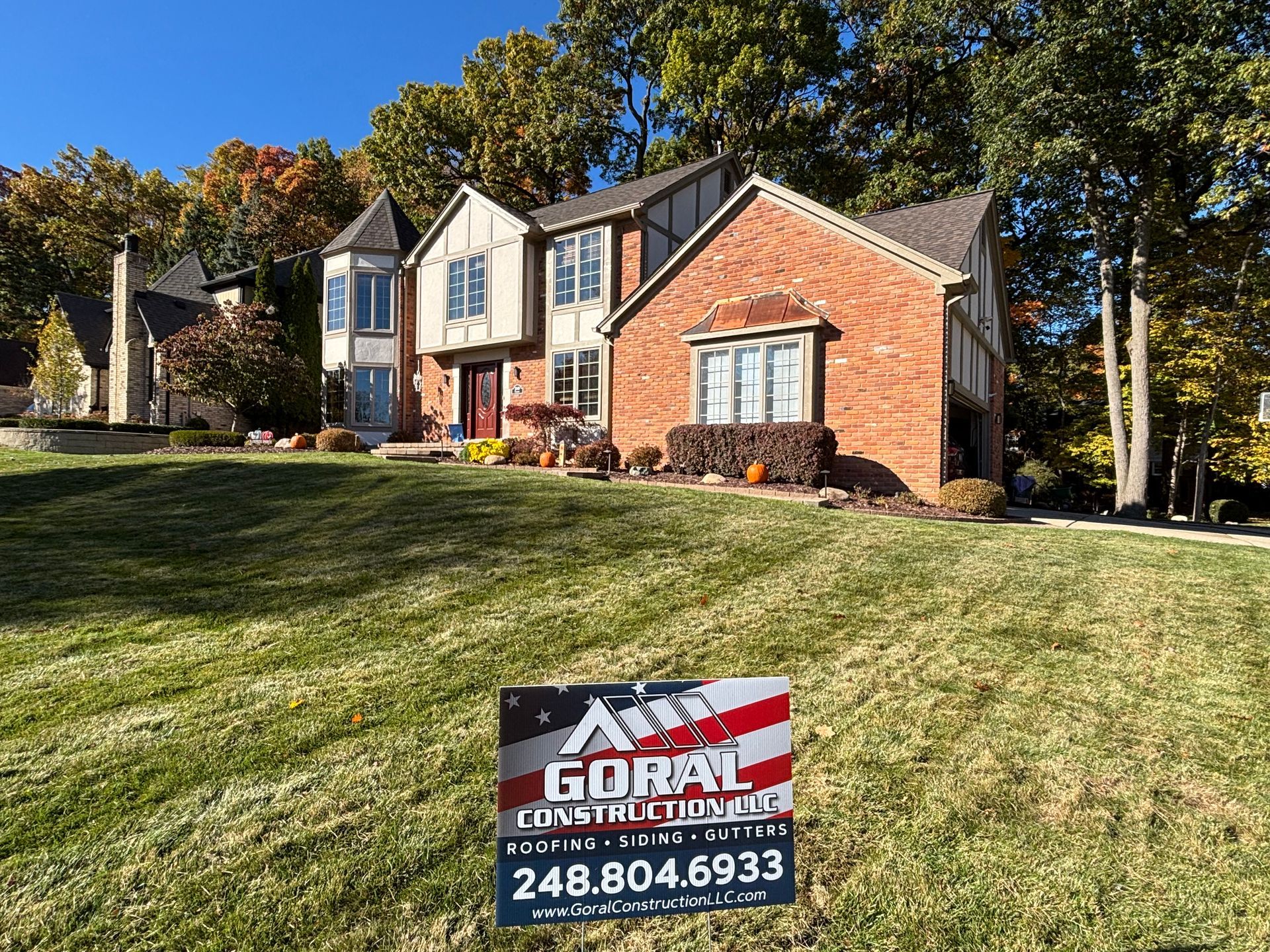
A local contractor has a reputation to protect in your community. They're here next year when you call about a leak. Their name appears on yard signs in your neighborhood. Their trucks are parked in Waterford and Clarkston, not somewhere in Ohio. Ask for a local business address and verify it. Check how long they've been operating in Oakland County specifically.
Goral Construction LLC is based in Waterford, Michigan, and has served Oakland County homeowners since 2021. We're your neighbors — and we plan to be here for every roof we've installed. If you're ready for a free, no-pressure inspection, call us at (248) 804-6933 . We'll give you straight answers, a detailed written estimate, and a crew you can trust from the first handshake to the final cleanup.
Share this post, you never know who you might help!